
Kurta Sets for Women for Travel: Comfortable & Easy to Pack
The suitcase is half packed, and you're standing in front of the wardrobe again with a heavily embroidered kurta set in one hand, doing the maths. Is it worth the space? What about the crease it'll pick up somewhere over the next six hours? Most trips come down to this same small argument with yourself, wanting to look put together but needing clothes that survive being folded into a bag for a week, squeezed between a phone charger and a pair of shoes.
Turns out a good kurta set for women solves this better than almost anything else in the closet. Not every fit behaves the same way once it's rolled up next to your shoes and toiletries, though. Some hold their shape. Some don't. Knowing the difference saves you from unpacking a wrinkled mess on day one, and it also means you spend less time each morning of the trip deciding what to wear.
What Actually Makes a Kurta Travel Well
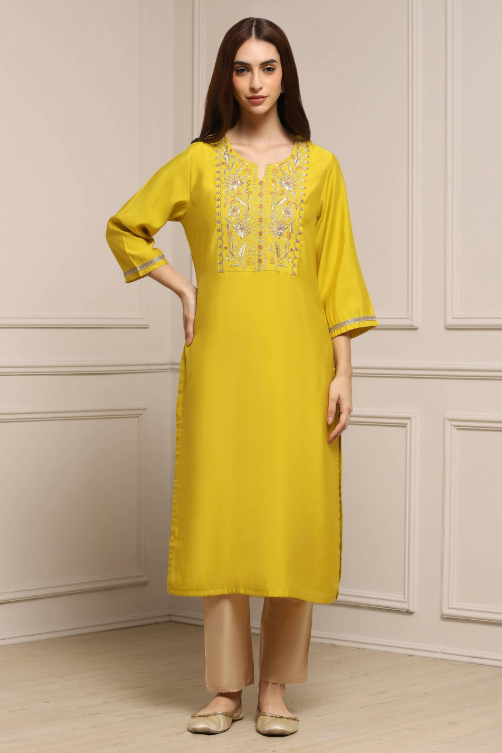
Fabric matters more than most people think. Cotton and cotton blends shrug off creases in a way silk just won't, and they handle both a warm afternoon at the market and a freezing flight cabin without fuss. Fit matters too. You want enough room through the waist and hips to sit for three hours on a train or reach up for an overhead bin without your kurta fighting you. And skip the heavy embellishment where you can. Fewer sequins and beads means less chance of something snagging when it's packed tight against your other clothes.
Colour is worth a thought as well, even if it rarely makes anyone's packing checklist. Darker or muted shades hide the odd travel stain far better than pale pastels, and they photograph just as well in whatever city you land in. A dupatta, if the set comes with one, is usually the easiest piece to fold small and tuck into a corner of the bag, so don't let it put you off a set you'd otherwise pack.
Once you've got that sorted, it's really about picking the right silhouette for the trip.
Five Fits Worth Packing
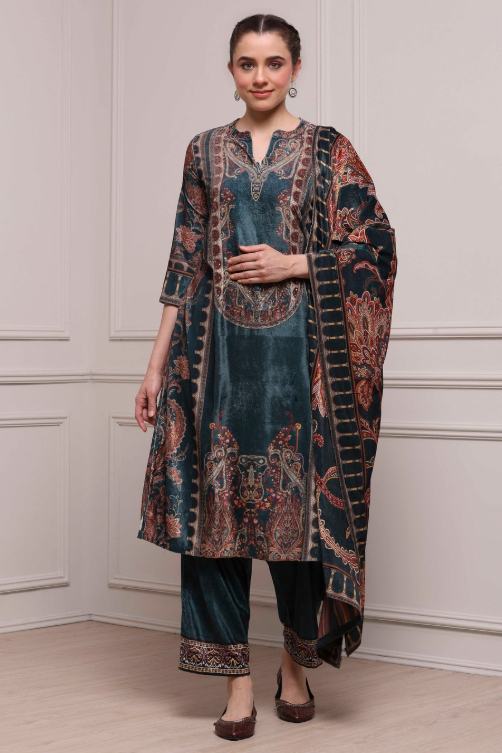
Biba's kurta set range has a lot of options, but these five hold up best once you're actually on the move.
Straight
This is the one to reach for first. A straight kurta set folds flat, doesn't crumple easily, and looks the same coming out of the bag as it did going in. Sneakers, flats, whatever, it works for airport days and long walks around a new city without asking much of you.
Regular Fit
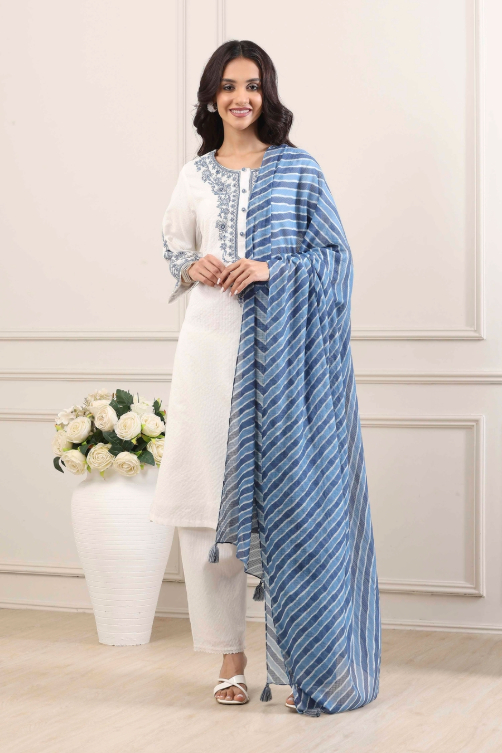
Not too loose, not too fitted. That's the whole appeal here. A regular fit set can carry you through a day of sightseeing and then straight into a slightly nicer dinner, which means fewer outfits to pack in the first place.
Relaxed
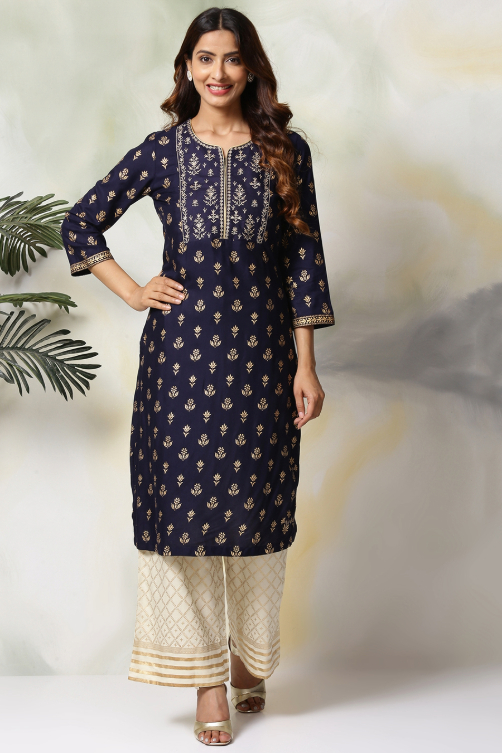
Long flights are where relaxed fits earn their keep. There's room to breathe, room to sit for hours without feeling it, and the looser cut hides creasing far better than a fitted piece would after a red-eye. Land, grab your bag, and go, no changing required.
A-Line
The gentle flare from the waist gives you a bit of shape without pinning your movement down. Works well on days that mix walking and sitting, museum in the morning, lunch afterward, that sort of pace.
Gathered
Softer through the waist, forgiving after a big travel meal or a day spent on your feet. Add a light jacket or a simple pair of earrings and it moves easily from daytime into an evening out.
Pack Fewer, Choose Better
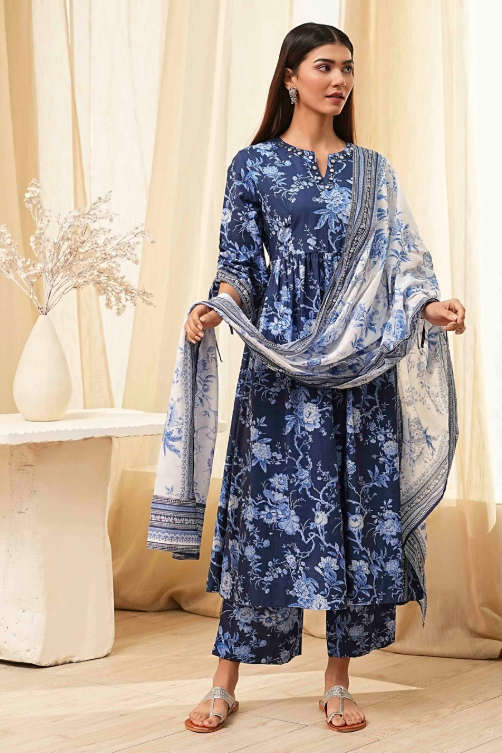
You don't need one kurta set per day. Two or three fits in colours that mix well will get you further than a suitcase full of near-identical pieces. Lean on straight or regular for daily wear, then bring one relaxed or gathered set for the longer days or evenings. A single pair of comfortable flats and one pair of heels or juttis usually covers everything these five fits need in the way of footwear, so there's no reason to pack more than that either. Less time worrying about wrinkles, more time actually being on the trip.
FAQS
Q. What is a kurta for women?
A. A kurta is a loose-fitting top, usually falling somewhere between the hip and the knee, though longer versions exist too. It comes in everything from simple cotton to heavily embellished festive pieces.
Q. How much does a kurta cost in India?
A. It ranges quite a bit. A few hundred rupees gets you a basic cotton kurta, while festive or heavily worked pieces can run into the thousands. Everyday kurta sets tend to sit somewhere comfortably in between.
Q. Is a kurta considered formal?
A. It can be, depending on the fabric and how it's styled. A plain cotton kurta reads casual, while something structured in a richer fabric moves easily into formal or festive territory.
Q. What is the difference between a kurta and a kurti?
A. Length, mostly. A kurta typically falls to the knee or below, while a kurti sits shorter and closer to the hip. Kurtis also tend to feel a bit more casual and modern by comparison.
Q. What is a straight kurta?
A. Exactly what it sounds like, a clean, unflared line from shoulder to hem with no gathering at the waist. It's one of the easiest fits to style, which is a big part of why it travels so well.
Q. What is a kalidar kurta?
A. It's built from triangular fabric panels, called kalis, stitched together to create a flared, flowing shape. That construction gives it more movement than a straight cut, which is why it tends to show up more in festive wear than everyday travel outfits.