
Lehenga vs Saree: Key Differences, Pros & Styling Tips
You've RSVP'd to a wedding, and the invite says festive attire, which somehow always leads to the same debate. Lehenga or saree? Both are unmistakably Indian, both photograph beautifully, and yet they suit completely different kinds of days. A saree is one continuous length of fabric, draped rather than stitched, which gives it a fluidity a lehenga simply can't replicate. A lehenga, being a stitched skirt paired with a blouse and dupatta, holds its shape without needing constant adjustment through the evening, and tends to suit occasions where movement, dancing at a sangeet, walking through a long reception, matters more than the drape.
Neither is inherently better. A saree tends to win out for something like an office festive do or a smaller, more intimate gathering, where its structure feels appropriately understated. A lehenga takes over for weddings, big celebrations, or anything where you want a bit more drama and don't mind the extra layers.
Lehengas and Skirts, Explained
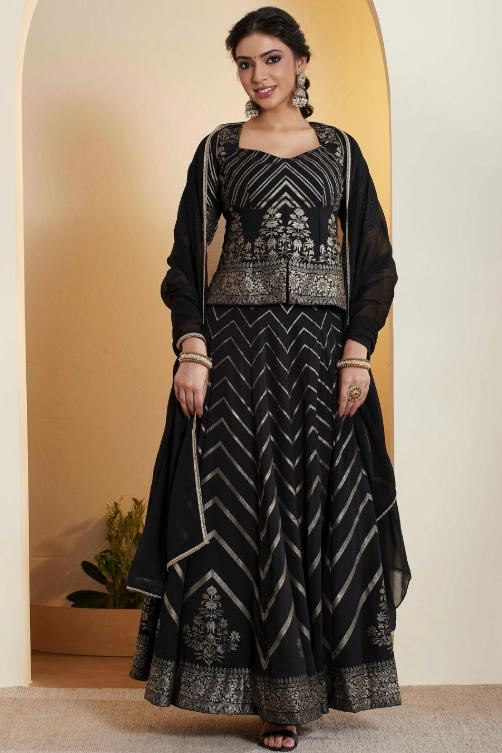
A lehenga set typically includes three pieces: a flared skirt, a fitted or semi-fitted blouse, and a dupatta draped over one shoulder or across the body. Skirt sets follow a similar idea but often skip the traditional blouse pairing for something more contemporary, a crop top or fitted top instead. Both work around the same core idea: a fuller silhouette below the waist that moves with you rather than staying flat against the body the way a saree does.
Biba's Fits and How to Carry Them Well
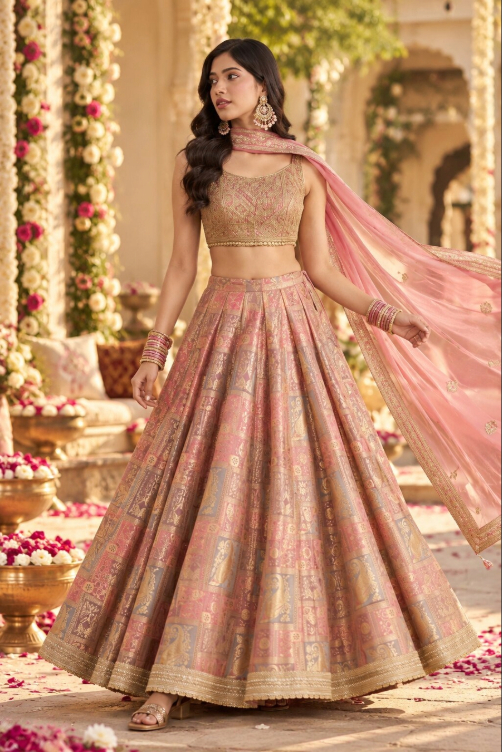
Biba's lehenga and skirt sets come in a handful of fits, each suited to a slightly different occasion and body.
Straight
A straight-cut lehenga skims the body before flaring gently near the hem, giving a cleaner silhouette than a fuller cut. This works particularly well if you want the embroidery or print to take centre stage rather than competing with excess volume. Walk with small, even steps and let the fabric do the movement rather than swishing it deliberately, it looks far more natural that way.
Regular
The regular fit sits somewhere in the middle, not too fitted, not overly flared, which makes it the easiest to carry if you're not used to wearing lehengas often. It forgives minor missteps in posture and movement better than a more structured cut, so it's a solid choice for a first lehenga or one you plan to wear across several different events.
Kalidar
Built from triangular fabric panels stitched together, a kalidar lehenga has more visible movement than most other cuts, the flare genuinely swings when you walk or twirl. Hold the dupatta loosely rather than pinning it too tightly, since part of what makes this silhouette work is letting the whole outfit move together rather than fixing pieces in place.
Anarkali, Fitted, Peplum, and Relaxed
These fits show up in smaller numbers within the collection, but each brings something specific. An Anarkali-style lehenga leans closer to a flared gown silhouette, elegant for a formal reception. A fitted cut suits anyone who prefers a more tailored, streamlined look without heavy flare. Peplum adds structure at the waist for a slightly modern edge, and the relax fit prioritises comfort above all, useful for long events where you're on your feet for hours. Whichever you pick, keep jewellery proportional to the outfit's detailing rather than layering everything on at once.
Moving With Confidence, Not Just Standing Still
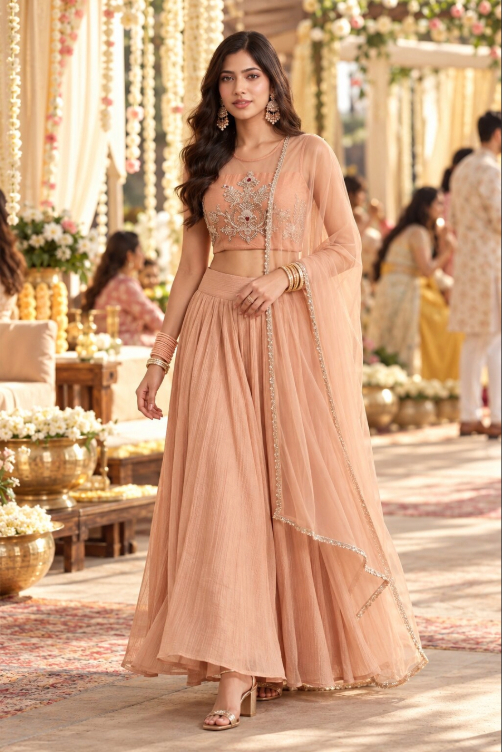
Carrying a lehenga well has less to do with the outfit and more to do with how you move in it. Practise walking in your blouse and skirt before the actual event, particularly if the hem is longer than what you're used to. Keep your shoulders relaxed rather than stiff, since tension shows up in how the dupatta sits and how naturally the skirt swings as you walk.
Choosing What Actually Fits the Occasion
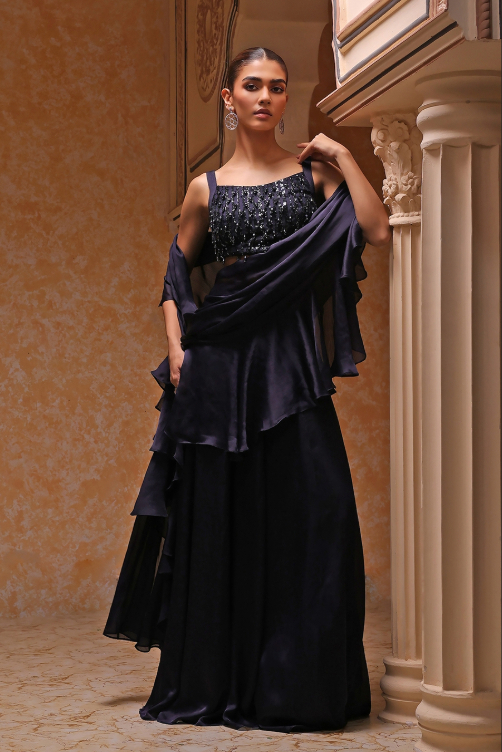
The saree versus lehenga decision usually resolves itself once you think about the event honestly. Sitting through a long ceremony calls for the ease of a saree, while an evening built around dancing and movement almost always favours a lehenga. Either way, fit and comfort matter more than which one photographs slightly better, and Biba's range in both categories means you don't have to compromise on either.
FAQS
Q. What is the difference between a lehenga and a saree?
A. A saree is a single draped length of fabric, while a lehenga is a stitched three-piece outfit, skirt, blouse, and dupatta. Sarees offer more fluidity, while lehengas hold their shape and structure, making them better suited to occasions involving a lot of movement.
Q. Which body shape is best for a lehenga?
A. Most body shapes suit a lehenga well, provided the fit and flare are chosen thoughtfully. Straight or A-line cuts tend to suit fuller figures, while more structured or fitted styles work well for slimmer frames wanting added volume.
Q. How can I look slim in a lehenga?
A. Choose a fitted or straight-cut lehenga rather than an overly voluminous one, and pair it with a well-tailored blouse. Vertical embroidery patterns and darker base colours also help create a slimmer visual line.
Q. Is a lehenga the same as a sari?
A. No, a lehenga and a sari are different garments. A sari is one draped piece of fabric, while a lehenga consists of a stitched skirt, blouse, and dupatta worn together as separate pieces.
Q. What saree should I wear for my body type?
A. Lighter, flowier fabrics like georgette work well for fuller figures, while structured silks suit slimmer frames looking to add definition. Vertical borders and draping styles that elongate the frame generally work across most body types.