
Popular Salwar Kameez Designs Every Woman Should Know
Open most Indian women's closets and you'll find at least one suit that's been worn far more than it was ever "supposed" to be : a cotton set bought for casual Sundays that somehow ended up at three different family
functions, or a heavily worked piece kept aside for "someday" that's now been re-worn at two weddings already. Trends come and go, but the salwar kameez keeps earning its spot on the hanger.
Part of that comes down to something modern dressing rarely gets right in one go: comfort and polish at the same time. A well-cut suit doesn't ask you to choose between feeling put together and feeling like yourself.
It also helps that a good suit set for women removes a lot of the decision-making. The top, bottom, and dupatta are already designed to sit together - same colour family, same fabric weight, proportions worked out by
someone who actually thought about how the silhouette falls. On a morning when you have four minutes and not forty, that matters more than people admit.
At BIBA, the classic women shalwar kameez keeps getting reworked with new cuts, lighter fabrics, prints that don't look like they're trying too hard, without losing what made the silhouette useful in the first place. Here's a
closer look at the styles worth actually knowing, not just owning.
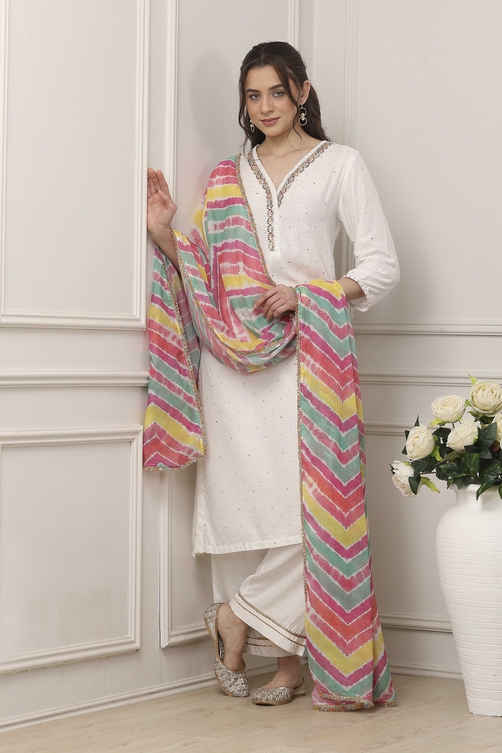
Five Silhouettes That Keep Coming Back
The Straight-Cut Suit
This is the one you reach for when you want to look finished without putting in visible effort. The kameez falls in a clean line from the shoulder with no flare to manage, which is exactly why it works under a blazer for a
meeting and just as easily with juttis for a festive lunch. Pair it with cigarette pants for a tailored look, or a simple salwar if you want something looser through the legs. There isn't much to "style" here — that's the point.
The Anarkali and the Kalidar
Both get their drama from the same place: panels (called kalis) stitched together to create flare from the waist down. The Anarkali - its name borrowed, according to popular legend, from a court dancer in Mughal-era stories,
has come to mean any kameez with that flowing, frock-like spread. The Kalidar is its slightly more structured cousin, often with cleaner panel lines and less volume at the hem.
What's changed in recent years is the weight. Older Anarkali sets could be genuinely heavy to wear for a six-hour wedding function. Newer versions use lighter linings and fewer layers, so the silhouette still photographs
beautifully but doesn't leave you exhausted by the reception.
The A-Line Suit
If you had to pick one cut that flatters almost everyone regardless of height or build, this would probably be it. Fitted at the bust and shoulders, it widens gradually toward the hem instead of clinging or ballooning, which
means it skips the two most common complaints women have about ethnic wear (too tight through the middle, or too much fabric everywhere). It's the safest first buy for anyone building an ethnic wardrobe from scratch.
The Asymmetric Suit
This one's for people who've already got the basics covered and want something that doesn't look like everyone else's. Instead of leaning on embroidery to stand out, asymmetric kurtas play with the hemline itself, high-low
cuts, layered panels, one side longer than the other. It reads as ethnic wear, but it photographs more like contemporary fashion, which is probably why it's become a favourite for younger shoppers who still want the cultural
anchor.
The Gathered Suit
Soft gathers at the waist or yoke create movement without bulk, which makes this one of the more forgiving options to wear in heat or humidity, there's airflow built into the design. It's less "occasion-ready" than an Anarkali and more "comfortable enough to wear for six hours at a cousin's mehendi without wanting to change halfway through." That's a real category, and this silhouette owns it.
Why a Coordinated Set Beats Mixing Your Own
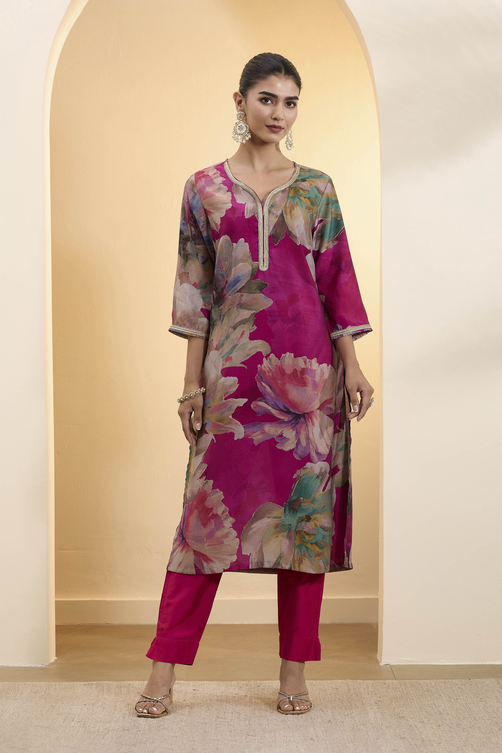
Anyone who's tried to match a kurta bought online with a separately purchased dupatta knows the problem: the colours are close but not right, the fabric weights don't sit the same way, and the whole outfit ends up looking assembled rather than designed. A coordinated suit set skips that entirely : the kameez, bottom, and dupatta are cut and dyed as one unit, so the proportions and shades are accounted for before you ever try it on.
BIBA builds its sets this way across fabrics too: breathable cotton for daily wear, and for festive pieces, Chanderi (a sheer, lightweight weave originally from Chanderi town in Madhya Pradesh, often finished with fine zari) or art silk, which mimics the look of silk at a lower weight and price point, useful if you're wearing it somewhere warm or for several hours.
Choosing the Right Bottom (It Changes More Than You'd Think)
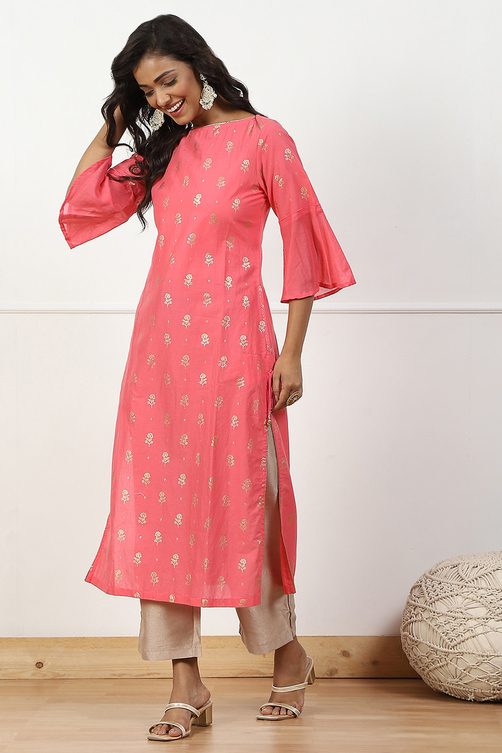
The kurta usually gets the attention, but swapping the bottom changes how the entire outfit reads.
. Pleated salwar - the traditional, generously cut bottom, pairs best with shorter kurtas and heritage-style prints. It's the most forgiving fit if you're not used to ethnic wear, since there's no tight gathering at the ankle to manage.
. Palazzo and sharara - both wide-legged, but with different personalities. Palazzos are fluid and easy, good for daytime festive wear. Shararas have more built-in drama from the flare and tend to read as "occasion wear" the
moment you put them on.
. Churidar - fitted through the leg with soft gathers at the ankle (the word literally means "bangle-like," for the bunched fabric). This is the bottom that pairs best with Anarkalis and Kalidars, since it keeps the silhouette balanced - flare up top, fitted below.
. Straight pants and cigarette trousers - the most office-friendly option, clean-lined and structured. If you're trying to make a salwar kurta feel like it belongs in a work wardrobe, this is the pairing that does it.
A Few Things That Actually Help When Shopping From Outside India
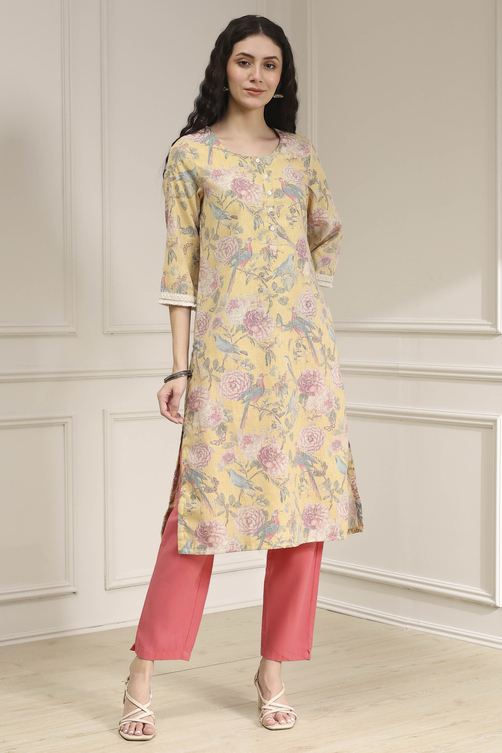
This part rarely gets covered, but it's where most of the real frustration happens when buying ethnic wear from the US or elsewhere abroad.
Go by inches, not just S/M/L. Sizing on Indian ethnic wear doesn't always map cleanly onto Western numeric sizing, and brands' size charts vary slightly from each other too. If the listing gives bust, waist, and kameez length in inches, use those instead of guessing from a US dress size.
Check the fabric care line before you buy, not after. Cotton sets are almost always machine-washable, but Chanderi and art silk pieces with zari work usually need dry cleaning to keep the metallic thread from tarnishing or the sheer weave from snagging.
Sheer fabrics need a slip or inner layer. Chanderi especially is sheer by design, that's part of its appeal, but it's meant to be worn over a matching camisole or slip, not on its own. If a set doesn't come with one included, factor
that into your order.
Factor in shipping time for festive buys. If you're ordering for a specific wedding or festival date, order at least two to three weeks out. International shipping windows are longer than domestic ones, and exchanges take
additional time on top of that.
BIBA's US platform is built around these specific friction points - clear inch-based measurements, fabric notes on every listing, and delivery timelines that account for shipping abroad, which is mostly just about removing the
guesswork that made cross-border ethnic shopping feel riskier than it needed to be.
The Short Version
The salwar kameez has stuck around this long for a fairly simple reason, it solves an actual problem instead of chasing a trend. It lets you dress for a long day without fighting your clothes, and it photographs well without
requiring three accessories and a steamer.
Pick the straight-cut if you want something you'll wear without thinking about it. Pick the Anarkali if the occasion calls for a bit of movement. Pick the A-line if you're not sure yet and want the safest, most flattering starting
point. Whichever one you land on, the goal is the same: an outfit that fits into your actual life, not one you have to plan your day around.
FAQs
Q. What are the most popular salwar kameez designs available at BIBA?
A. The five styles most women keep coming back to are the straight-cut suit (clean and easy for daily wear), the Anarkali and Kalidar (flared, great for festive occasions), the A-line suit (flattering on almost everyone), the asymmetric suit (a more modern, fashion-forward cut), and the gathered suit (soft and comfortable for warm-weather days).
Q. What is the difference between a salwar kameez and a kurta set?
A. A salwar kameez is a specific combination: a kameez (top) paired with a salwar (a traditional, gathered or tapered-leg bottom), usually with a matching dupatta. A "kurta set" is a broader term, the kurta can be paired with all
kinds of bottoms, like palazzos, trousers, leggings, or churidars, not just a salwar. So a salwar kameez is really one type of kurta set, just with a specific bottom style attached to the name.
Q. Are BIBA suit sets available with dupattas?
A. Yes, most traditional salwar kameez and suit sets at BIBA come with a coordinated dupatta included as part of the set, since the whole point of a "set" is that everything (top, bottom, and dupatta) is designed and dyed
together so it doesn't need to be matched separately.
Q. What sizes are available in BIBA salwar kameez for the US market?
A. BIBA offers a wide size range, from XS up to 5XL, so most body types are covered. Since fit can vary slightly by style, it's best to check the bust, waist, and hip measurements (in inches) listed on each product page rather
than relying only on the letter size; that way you're matching your actual measurements, not just guessing from a US dress size.