
Indian ethnic dresses have quietly become the ultimate wardrobe staple, not because you save them for weddings, but because every style works harder in your daily life than you think. Whether you're heading to the office in a polished suit set, grabbing coffee in a relaxed kurta, or attending a wedding in an anarkali, Indian ethnic wear offers silhouettes that adapt to every moment in your life. The key is understanding which style does what and why building variety actually makes getting dressed easier, not harder.
If you've ever stood in front of your wardrobe wondering whether an anarkali and a salwar kameez for women are basically the same thing, or when exactly you'd reach for a lehenga over a suit set, this guide breaks down the main Indian dress styles and shows you how to actually wear them in your modern life.
Salwar Kameez: The Structured Professional
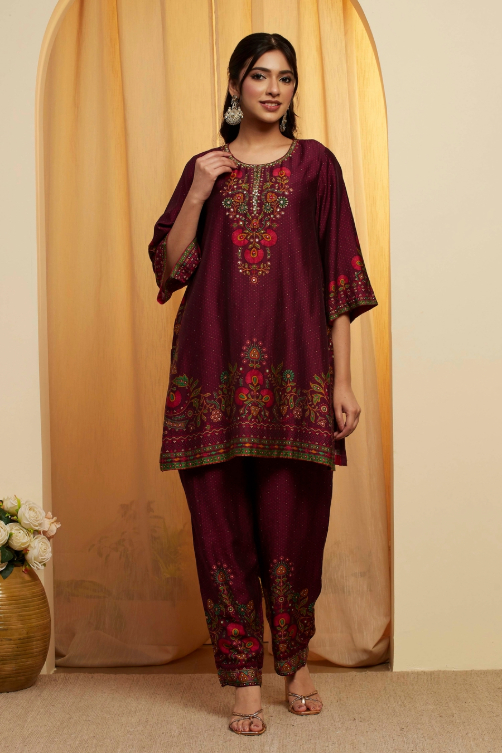
The salwar kameez is the backbone of contemporary Indian workwear, and it's far more versatile than people realize. This pairing of a long tunic (kameez) with fitted or loose trousers (salwar) creates clean lines that read as polished in professional settings without requiring you to abandon Indian wear entirely.
What makes salwar kameez brilliant for office wear is its structure. A good kameez in a good fabric will take you from your 9 to 5 to evening events. Pair it with minimal jewelry, and you're boardroom-ready; add a contrasting dupatta and gold earrings, and you're set for a celebration. The silhouette is also forgiving; the longer tunic balances the body in ways that feel contemporary rather than concealing.
The best salwar kameez pieces for everyday wear feature straight cuts and minimal embroidery, keeping the focus on fabric quality and fit. Look for natural materials like cotton or linen for summer, and structured blends for year-round wear. Many working women build their ethnic wardrobe around quality suit sets in neutral tones precisely because one well-made piece can do multiple jobs.
Kurtas & Kurta Sets: The Everyday Anchor
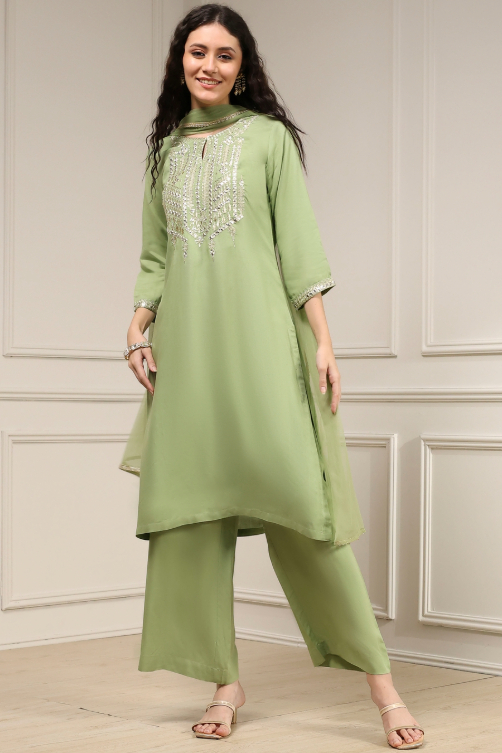
If salwar kameez is your professional foundation, kurtas are your everyday companion. A kurta is simply a long tunic worn with bottoms of your choice - straight pants, traditional churidars, even jeans, which is why it's become the most accessible entry point into regular ethnic wear.
The beauty of kurtas is their flexibility. A simple A-line kurta set in cotton works for running errands, working from home, or casual meetups. A structured kurta set (kurta with coordinating bottoms) offers the put-together feeling of a salwar kameez but with a softer, more relaxed energy. Layer it over pants, wear it with palazzos, or pair it with a skirt; kurtas genuinely adapt to however you want to wear them.
For everyday styling, look for kurtas in:
Shorter lengths (knee-length or midi) for casual, younger energy
Breathable fabrics (cotton, linen blends) for comfort
Minimal detailing that still feels intentional (subtle embroidery, interesting hemlines, asymmetric cuts)
This is where contemporary design really shines. Modern kurta sets have moved beyond "ethnic wear is a category", they're becoming standalone wardrobe pieces that just happen to be Indian. A well-styled kurta can feel as current as any contemporary dress.
Anarkali: The Silhouette That Tells a Story
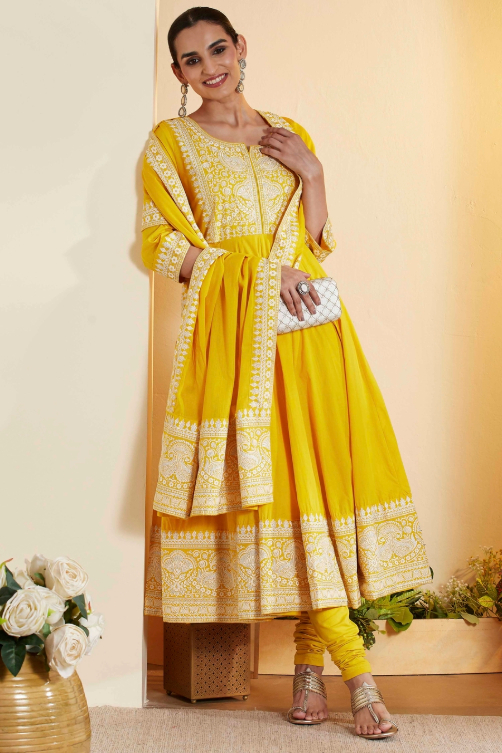
An anarkali suit set is a showstopper, a voluminous, floor-length silhouette that flares from the bust or waist. Traditionally worn for special occasions, anarkalis have evolved into something more nuanced: wedding wear, absolutely, but also semi-formal events, celebrations, and for anyone who wants to feel dressed up without the formality of a lehenga.
The key difference between an anarkali and a salwar kameez is volume and occasion energy. An anarkali announces itself; it's romantic, dramatic, and unapologetically Indian. A salwar kameez whispers. An anarkali works best when you want to be noticed at engagement parties, Diwali dinners, and celebrations where you want your outfit to reflect the occasion.
The most wearable anarkalis today blend traditional silhouettes with contemporary fabrics and colors. Instead of heavy brocades exclusively, you'll find them in lightweight rayon, viscose, and cotton blends. The silhouette remains distinctly anarkali, but the execution feels modern. This makes them accessible for women who love the drama of the style but want something they can actually move in.
When choosing an anarkali, fit matters enormously. The waist position will determine if the silhouette flatters your frame, and it should feel intentional in terms of length – not accidentally long, but deliberately grazing the floor. Pair with minimal jewelry to let the garment speak, or add a statement necklace if the neckline allows.
Lehengas: Wedding Season Confidence
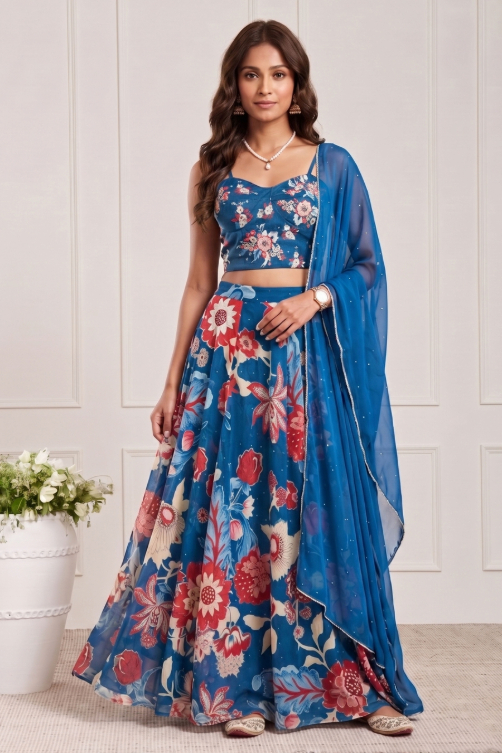
A lehenga set is the three-piece Indian bride and celebration wear: a flared skirt (lehenga), a fitted blouse (choli), and a dupatta (scarf). Of all Indian dress types, lehengas require the most specific occasion; they're unapologetically wedding wear but within that category, they're unmatched.
Lehengas work because they solve a specific problem: how to feel yourself completely while honoring the occasion. The silhouette is inherently celebratory, the embroidery and fabrics are luxurious, and there's something about wearing a lehenga set that shifts your entire energy. You're not just wearing clothes; you're wearing an occasion.
The versatility in lehengas comes through styling. A heavy bridal lehenga is different from a festive-wear lehenga. Colors beyond traditional reds and gold, deep blues, burgundy, even pastels, have made lehengas feel fresher and more personal. Many women now mix and match pieces, pairing a lehenga skirt with a contemporary blouse or wearing a lehenga set styled unexpectedly with different jewelry.
For wedding guests and festival celebrations, choosing the right lehenga is about understanding the occasion's energy and your personal comfort. A heavier, more embellished piece works for major events; a simpler, lighter lehenga suits smaller celebrations or when you want elegance without weight.
Building Your Indian Ethnic Wardrobe
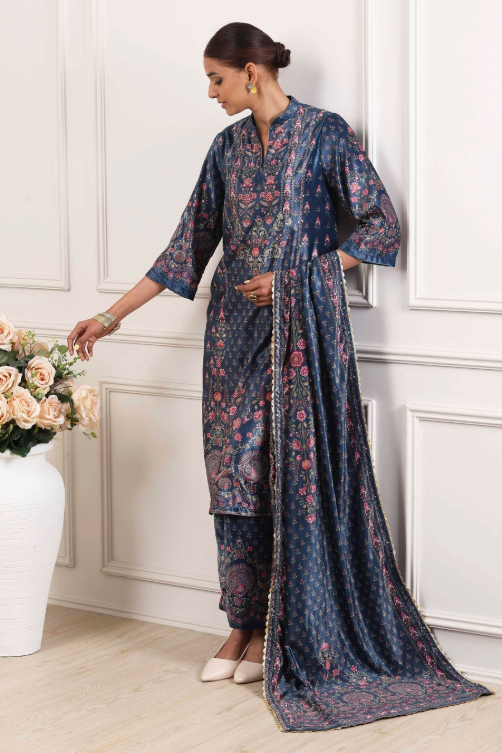
Understanding these different styles is only the first step. The real power comes from building a balanced ethnic wardrobe that actually works for your life.
“Begin with the basics: good kurta sets in neutral shades and fabrics. These are the pieces you’ll reach for on casual days and while working from home. Add a well-fitted salwar kameez in a professional neutral like black, navy, or cream that handles office and semi-formal events. Then layer in occasion pieces: an anarkali for semi-formal celebrations and an investment lehenga for weddings.
The most versatile ethnic wardrobes aren't built around "having everything." They're built around having the right pieces that do multiple jobs. A kurta works for casual, semi-casual, and casual-professional moments. A salwar kameez bridges professional and celebratory. An anarkali handles the gap between everyday and wedding-level celebration. A lehenga is its own occasion.
When you think of Indian ethnic dresses as a spectrum rather than separate categories, getting dressed becomes easier. You're not choosing between "ethnic wear" and "regular clothes", you're choosing which piece matches the energy of your day.
FAQs
Q. What are the different styles of Indian dresses?
A. The main styles are salwar kameez, kurtas and kurta sets, anarkalis, and lehengas, ranging from everyday wear to wedding occasions.
Q. What is the difference between traditional and ethnic dresses?
A. Traditional dresses are usually heavily embellished pieces for weddings or major occasions (like a bridal lehenga), while ethnic wear is the broader, everyday-friendly category, like simple kurtas or neutral salwar kameez.
Q. When to wear ethnic wear?
A. Kurtas for casual days, salwar kameez for office or semi-formal events, anarkalis for celebrations, and lehengas for weddings.
Q. What is meant by ethnic dress?
A. Clothing rooted in traditional regional silhouettes and craftsmanship, in this case, Indian styles like kurtas, salwar kameez, anarkalis, and lehengas.
Q. What is Indian ethnic wear?
A. Clothing built around traditional Indian silhouettes that now spans everyday wear to occasion wear, not just weddings or festivals.